



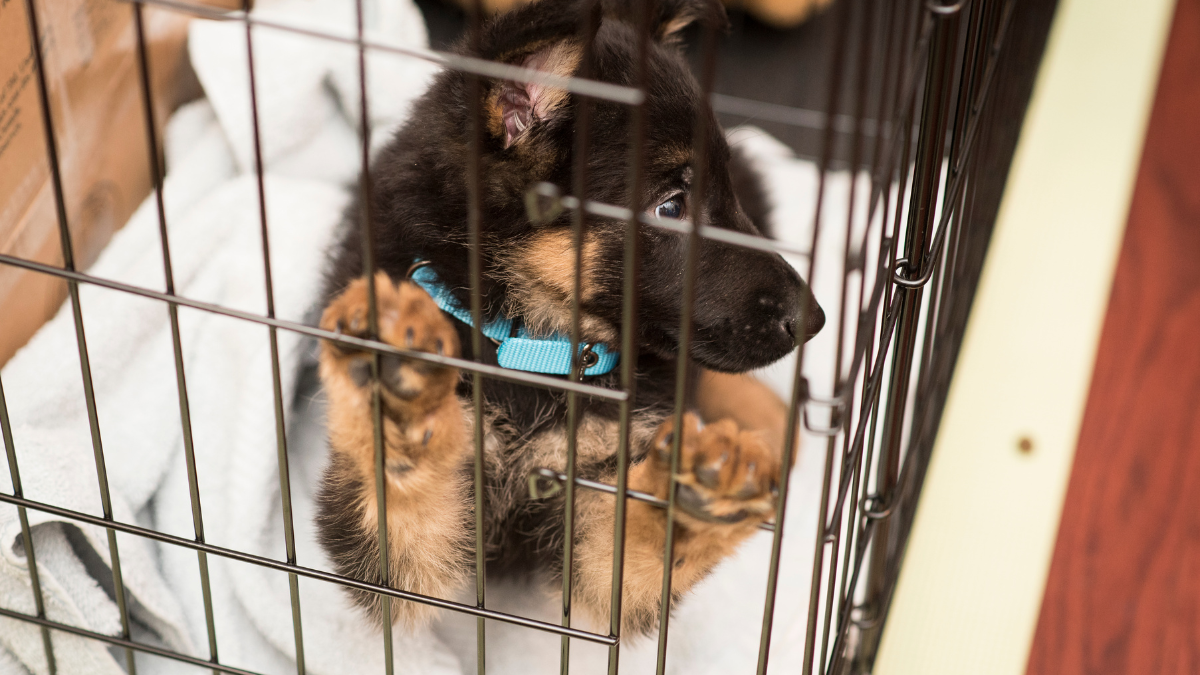
Crate training is one of the most valuable skills a dog can learn, yet it is often the most challenging stage for new pet parents. The moment the crate door closes, many puppies begin to whine, cry, bark, or scratch. Even the calmest humans feel stressed when a puppy cries. It is loud, emotional, and deeply distracting. Although the experience can be overwhelming, it is important to remember that crate whining is normal, temporary, and fixable with the right approach.
Puppies do not arrive knowing what a crate is or why they need to stay inside it. They rely entirely on humans to guide them through this new experience. Once you understand why your puppy is whining and how to respond, crate training becomes smoother and far more successful. This article dives into the psychology behind crate crying, expert strategies to reduce it, and a complete training plan that helps your puppy settle quickly and confidently.
Understanding Why Puppies Whine in the Crate
A puppy’s brain is still developing. Their emotions are strong, their instincts are active, and their communication skills are limited. Whining is not random. It is a message. The crate triggers different emotions, and each one produces a different type of cry. Identifying the cause behind the whining is the first step toward fixing it.
1. The Puppy Needs to Go Potty
Puppies have very small bladders and no long-term control over their bowel movements. When your puppy cries in the crate soon after entering it, it may be a sign that they genuinely need to go outside. Ignoring a potty cry can lead to accidents inside the crate, anxiety, or a negative association with the crate environment.
A basic rule of thumb is that puppies can hold their bladder for a number of hours equal to their age in months. A two-month-old puppy may last two hours. A three-month-old may last three hours. Anything beyond that is unfair for the puppy and will almost always result in whining, pacing, or distress.
Some puppies signal their need to go potty with a soft, repetitive whimper. Others escalate quickly. If your puppy has eaten, drunk water, or been active in the previous hour, a potty break is likely necessary.
2. The Puppy Feels Unsafe or Alone
Puppies are born into litters surrounded by warmth, touch, and constant companionship. Being separated from their mother and siblings is a sudden and intense change. When placed alone in a crate, especially at night, a puppy may feel isolated. This is one of the strongest triggers for whining.
Crying from separation anxiety usually begins immediately after you walk away. The puppy may paw at the crate door, pace within the crate, or produce sharp, repetitive cries. These are fear-based cries, not manipulative ones. Puppies in this state are not trying to dominate or test you. They are expressing fear and confusion.
A puppy who can see or hear you often relaxes. During the first week, keeping the crate near your bed or in a location where the puppy can sense your presence can significantly reduce whining.
3. The Crate Environment Is Uncomfortable
A crate must feel like a safe den, not a cage. If the crate is too large, the puppy may feel exposed. If it is too small, the puppy may feel trapped. If the bedding is cold or the room is drafty, whining becomes more likely.
Comfort inside the crate matters more than many people realize. Puppies need softness under their body, warmth during colder seasons, and a familiar scent. A blanket with the breeder’s scent or your scent can make the transition faster. When the crate is inviting and cozy, puppies settle with much less resistance.
4. The Puppy Is Overtired or Overstimulated
An overstimulated puppy has too much energy to settle. An overtired puppy may be emotionally overwhelmed. Both conditions create whining in the crate. When puppies receive too much play right before crating, their arousal levels spike. When they receive too little stimulation during the day, they store energy that spills into whining.
A balanced routine is key. Puppies do best with predictable cycles of play, training, stimulation, rest, and crate naps. Without this rhythm, whining becomes a default behavior.
5. The Puppy Has Learned That Whining Works
Puppies are fast learners. If a puppy whines and a human immediately opens the crate, the puppy learns that crying brings freedom. This creates a reward loop. The puppy will repeat the behavior not because they are scared, but because it has worked before.
This type of whining usually sounds different. It is less frantic and more rhythmic. The puppy may pause between cries to listen for your footsteps. This is attention-seeking behavior reinforced by human response. It is correctable, but it requires timing and consistency.
6. The Puppy Is Hungry or Thirsty
If the puppy is whining in the crate close to bedtime, hunger or thirst may be the cause. Feeding too close to bedtime can also create digestive discomfort, which makes settling harder. Puppies should have their final meal about one hour before sleeping, followed by outdoor time. Water should be offered consistently throughout the day, but reduced before night to avoid frequent potty needs.
7. The Puppy Is Adjusting to a Major Life Change
Leaving the breeder, entering a new home, meeting new humans, and being introduced to unfamiliar environments is overwhelming. Crate crying is part of this adjustment. Puppies need time to understand routines, build trust, and feel confident in their new home. This adjustment usually takes a few days to a few weeks. During this time, crying is not a sign of failure. It is part of the learning process.
How to Stop Crate Whining Quickly and Kindly
Whining can be reduced significantly with a structured approach that respects the puppy’s emotions while establishing healthy habits. The following strategies work across breeds, sizes, temperaments, and living environments.
1. Build Positive Associations with the Crate
Your puppy must believe that the crate is a pleasant, rewarding space. Feeding meals inside the crate, placing high-value treats inside, and using a soft voice when introducing the crate all help to create a positive emotional link. Avoid shoving or forcing the puppy inside. The goal is for the puppy to voluntary enter the crate with confidence.
You can place a safe chew toy, such as a food-filled toy or appropriate teether, inside the crate. Chewing reduces stress and redirects energy. This keeps the puppy calm and helps prevent whining.
2. Start with Short, Manageable Sessions
Puppies learn gradually. If the first crate experience lasts too long, the puppy may panic. Begin with short, positive crate entries. A few minutes with the door open. Then a few minutes with the door closed. Gradually lengthen the duration as the puppy becomes more comfortable.
Session structure matters. End crate sessions while the puppy is calm. Never end the session while the puppy is crying, unless it is a potty emergency. Ending a session during whining teaches the puppy that crying opens the door.
3. Place the Crate in a Strategic Location
For the first week, placing the crate near your bed can dramatically reduce nighttime crying. Puppies feel safer when they can sense your presence. Over time, the crate can be moved to another location in the home once the puppy feels secure.
Avoid placing the crate in noisy or high-traffic areas. Avoid cold rooms or areas near vents. The environment should be quiet, warm, and predictable.
4. Use White Noise or Calming Sounds
Many puppies respond well to consistent sound. Household noises, outdoor traffic, and unfamiliar night sounds can trigger crying. A white noise machine or gentle calming sound can mask these environmental triggers and help the puppy relax. This is especially helpful for apartment or city living.
5. Avoid Overreacting to Mild Whining
Not all whining requires intervention. Some puppies whimper briefly before settling. If the whining is soft, intermittent, or short-lived, give the puppy a chance to self-soothe. Overreacting teaches the puppy that all whining brings attention.
If the puppy escalates into panic-level crying, this is different. Panic is not self-soothing. Panic indicates fear, distress, or unmet needs. Gentle reassurance, potty checks, and adjusting the training plan are necessary in those cases.
6. Pair Crate Time with Natural Sleep Cycles
Puppies sleep frequently. Using their natural cycles helps reduce crate whining. After a play session, short walk, sniff game, or training session, puppies become tired. This is the ideal time to place them in the crate. They are far more likely to fall asleep without whining.
Avoid placing the puppy in the crate immediately after intense excitement. Allow them a short cool-down period first.
7. Create a Consistent Routine
Routine builds confidence. Puppies thrive when they understand what comes next. A predictable daily structure that includes feeding times, potty breaks, play sessions, naps, and crate intervals makes crate training significantly easier. When puppies know the routine, whining decreases because uncertainty decreases.
8. Use Gentle Nighttime Potty Breaks
Nighttime crate crying is often linked to potty needs. When taking the puppy out during the night, remain calm and quiet. Avoid play, treats, or long interactions. The goal is to make nighttime potty breaks functional and boring. This teaches the puppy that nighttime is for sleep, not entertainment.
9. Gradually Increase Independence
As the puppy becomes comfortable, begin practicing short periods where the puppy cannot see you. Step out of the room for a few seconds at first, then longer as the puppy remains calm. This builds independence and reduces separation anxiety.
Age-Based Guide to Crate Whining
Puppies develop rapidly. Understanding what is normal at each age helps you respond correctly.
8 to 10 Weeks Old
This is the most challenging phase. Puppies often cry intensely during the first few nights. They are away from their litter for the first time, learning a new environment, and adjusting to a crate. Expect frequent potty breaks and emotional whining. This phase improves quickly with consistency.
10 to 14 Weeks Old
Puppies begin recognizing their routine. Crate crying becomes more predictable. Attention-seeking whining may emerge here as puppies learn what behavior gets results. This is a good time to strengthen self-soothing behaviors.
14 to 20 Weeks Old
Most puppies settle easily, though some may still whine during high-energy periods. Increased physical activity and mental stimulation help significantly. Crate naps become normal, and nighttime whining decreases.
How to Tell if Crate Whining is Normal or Concerning
Whining is usually normal, but certain signs indicate a deeper issue.
Signs of Normal Crate Whining
The puppy stops whining after a few minutes
The puppy settles after you return
The cries are soft, spaced out, or intermittent
Whining only happens during transitions
Signs of Concerning Whining
The puppy screams, panics, or hyperventilates
The puppy tries to escape aggressively
The puppy cries for long periods without stopping
The puppy refuses to enter the crate for days
The puppy seems ill or in discomfort
In these cases, a pause in training or a modified approach is necessary.
Crate Training Schedule for Puppies
A schedule helps organize the day and reduce whining. Here is a balanced approach for most puppies.
Morning: potty break, breakfast, short play, crate nap
Late morning: potty break, training activity, crate nap
Afternoon: potty break, play session, supervised chew time, short crate session
Early evening: dinner, potty break, calm play, crate nap
Night: final potty break, bedtime crate session
This routine prevents overexcitement, overtiredness, and boredom.
When to Seek Professional Support
If crate whining persists for weeks despite consistent training, the puppy may need individualized support. Professional trainers or behavior specialists can evaluate triggers, environment, temperament, and routine. Severe separation anxiety or trauma-based reactions may require a tailored plan.
Final Thoughts
Crate whining is a normal part of puppyhood, not a sign of misbehavior or failure. Puppies cry because they are learning. They cry because they need guidance. They cry because they want safety, comfort, and predictability. With patience and structure, whining reduces quickly and crate training becomes one of the most valuable skills you will ever teach your dog.
A calm, crate-trained puppy becomes a confident adult dog who handles travel, grooming, vet visits, rest time, and household routines with ease. The effort you put into crate training now creates long-term emotional stability for your dog.
Your puppy will learn. Your home will become quieter. And the crate will become a peaceful resting place rather than a source of stress.